Plan
A single active format can work if the group is compact, the venue is flexible, and the comfort spread is clear.

The useful DBS pattern is not one perfect activity. It is repeat planning across changing group size, energy level, activity history, and venue constraints.
Based on past Cohesion DBS bookings.
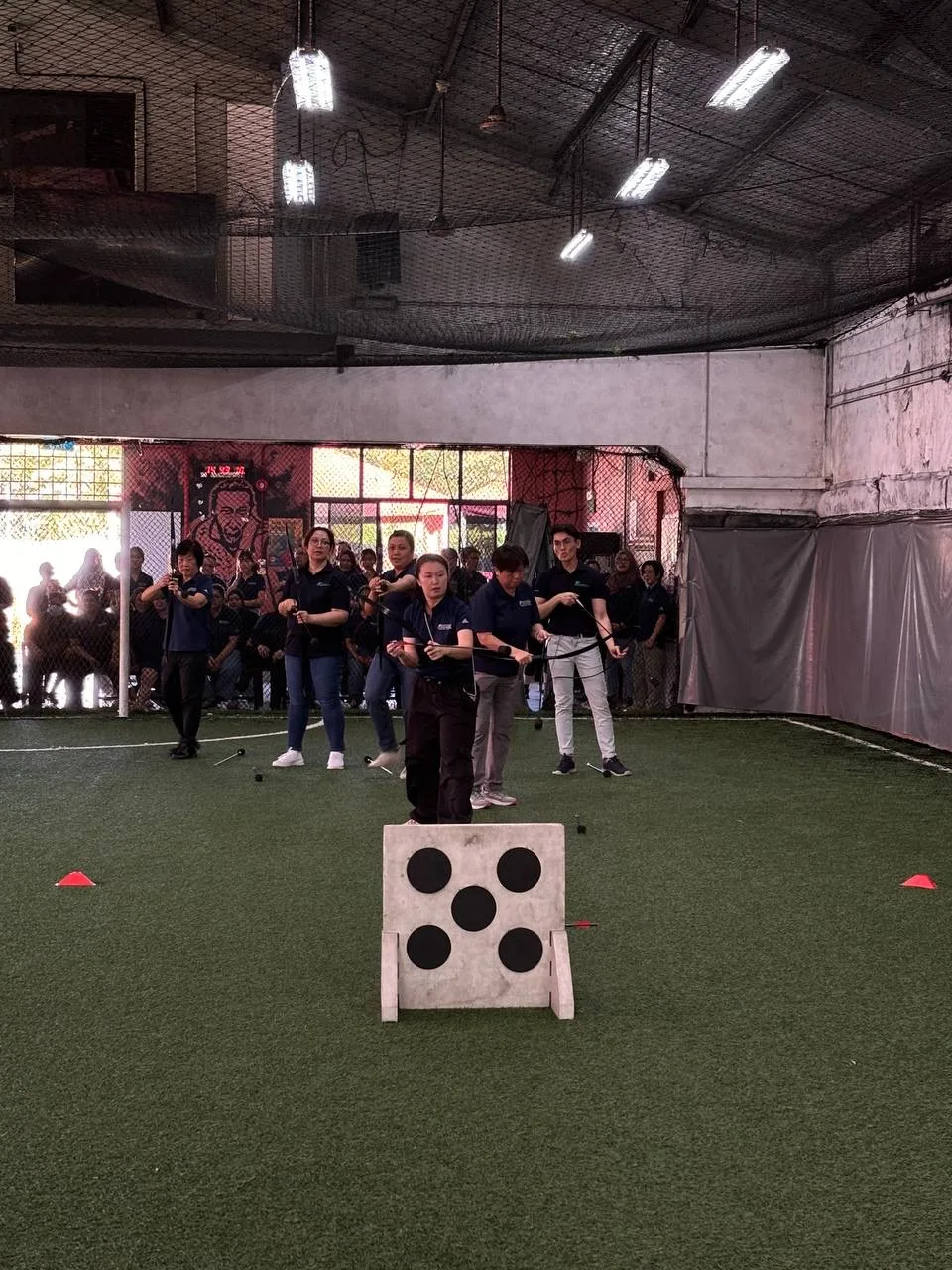
This page keeps the familiar DBS case-study page and focuses it on the planning pattern you can reuse: changing the format when the group changes.
| Client | DBS |
|---|---|
| Sector | Finance |
| Booking pattern | Returning client across multiple formats |
| Recorded span used in source article | 2022 to 2024 |
| Group pattern | Roughly 10-14 people up to around 80 participants |
| Formats | Archery Tag, Laser Tag, Telematch, and Bubble Soccer |
| 80-person example | Archery Tag and Laser Tag at The Cage Kallang |
| Planning reference | Past Cohesion DBS bookings |
Use this planner to turn the example into a starting brief. Share your date, venue, weather exposure, food plans, approvals, facilitator needs, budget, and event timing so Cohesion can shape the format around the real event.
Recommended direction
A single active format can work if the group is compact, the venue is flexible, and the comfort spread is clear.
Send the current headcount and past activity history into the Event Planner.
Use this pattern when the same company or department returns to team building but the headcount, comfort level, or venue has changed.
A 10-14 person session can be sharper or more compact. Around 80 people usually needs stronger pacing, rotation, and holding space.
Office teams often include competitive participants and colleagues who mainly want a shared social experience.
A repeat client may need a familiar event identity, but the activity mix should still match the current crowd.
Indoor space, pitch count, weather exposure, and food timing can change whether a single format or mixed format is cleaner.
This case study is useful as a planning reference. The right activity mix still depends on your group size, venue, timing, weather plan, and how active your team wants to be.
| Keep | Adjust | Reason |
|---|---|---|
| Changing the activity to fit group size | Repeating one activity by default | Different office headcounts need different pacing. |
| Mixed-format options for larger groups | One long game loop for everyone | Variety can reduce waiting pressure when the group is broad. |
| Known comfort signals from past sessions | Assuming every repeat crowd wants higher intensity | Repeat planning should learn from the brief, not just the logo. |
| Venue and weather fit | Choosing the activity before checking space | A good format still needs the right footprint. |
Start from the useful structure, then tune the activity mix around your current team. A repeatable event is not about copying every detail; it is about keeping the pacing, briefing, and movement clean for the group in front of you.
Use these guides if you are still deciding on activity fit, headcount, budget, venue, weather plan, quote details, participation comfort, or event-day timing.
It shows how one office client used different active formats across changing group sizes instead of treating every session as the same brief.
Use it as a reminder to refresh the brief each time. The best repeat format still depends on the current headcount, energy level, venue, timing, and activity history.
Past DBS bookings include Archery Tag, Laser Tag, Telematch, and Bubble Soccer across smaller and larger office groups.
A mixed format can be useful when the group is larger, more varied in comfort level, or likely to benefit from different activity rhythms.
Recheck group size, energy, venue, weather, food, and the current objective before deciding whether to repeat one activity or build a mixed format.
Use this case study as a starting point. Your event still needs its own fit check around people, space, activity intensity, weather, food, movement, and approvals.