Start with the headcount
A finance or office team should set the likely final range first, because a mid-size group changes pitch count and format mix.
 WhatsApp
Mid-size finance case study
UOB is a useful mid-size planning example because the record scales from small office sessions up to a 150-person active event. Use it when a finance or office team is planning a mid-size day (around 150 participants and up) and needs pitch count, team splits, and rotation planned early.
Start with the example
Choose the closest event shape. The recommendation shows whether a mid-size group can stay with one active format or needs a two-format rotation across more pitches.
Decision framework
The page should help finance and office teams decide when one format is enough, when a mid-size group needs a rotation, and what to send to Cohesion for a sharper recommendation.
A finance or office team should set the likely final range first, because a mid-size group changes pitch count and format mix.
A compact group can stay with one format, while a 150-person mid-size day usually needs parallel pitches or a two-format rotation.
Breaks, hydration, team splits, and venue movement should sit around the activity instead of being discovered on event day.
What to borrow
The useful lesson is not that every team should copy one exact event. UOB gives teams a clear example of a finance and office team scaling the same active, facilitated direction from a small session up to a mid-size 150-person day.
The mid-size end of the pattern shows how pitch count, team splits, and rotation should be planned before a 150-person active day.
Returning client 6A returning finance client helps another event lead see that the active-event direction can stay familiar while the group size changes.
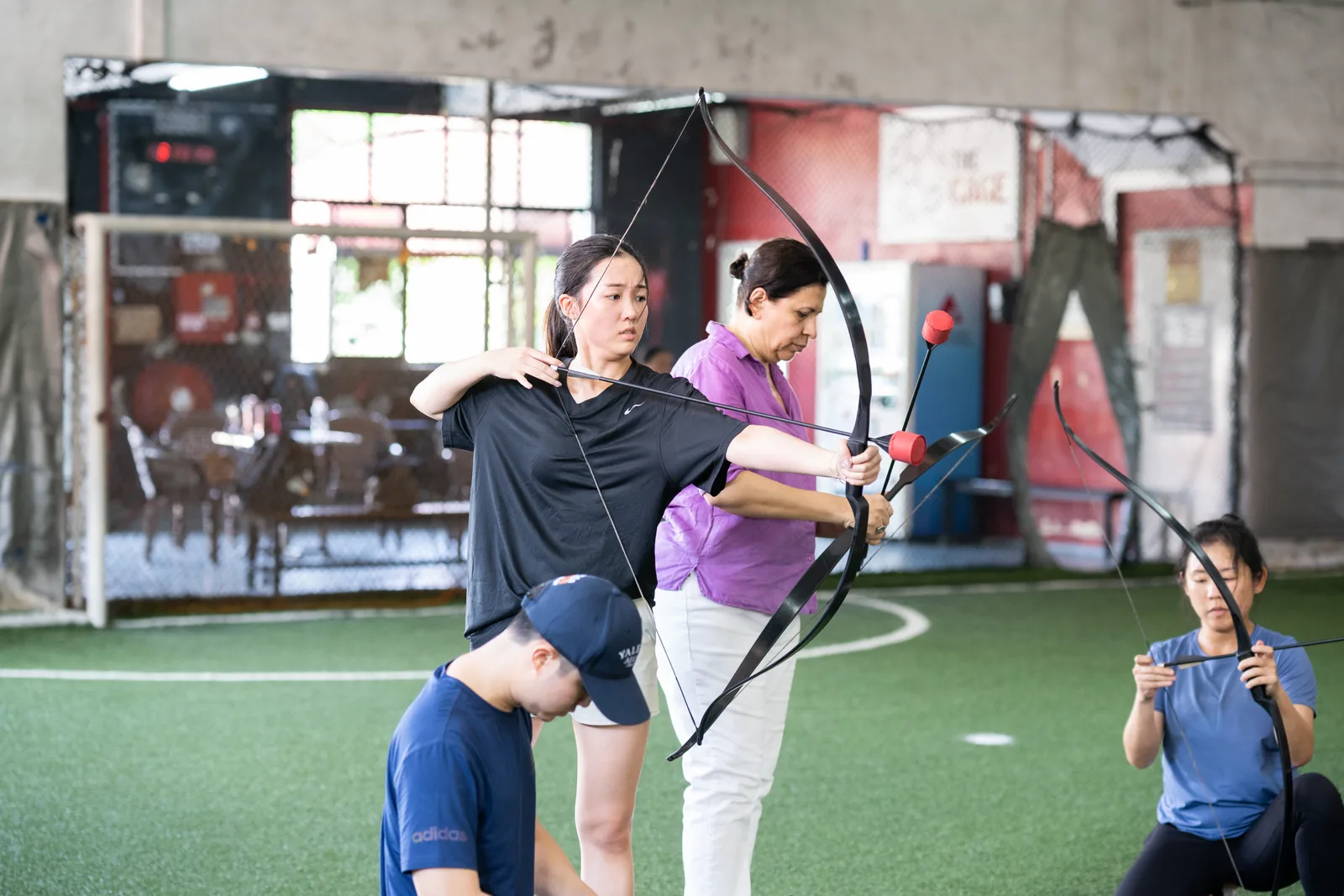
Active formats 4Archery Tag, Laser Tag, Telematch, and Dodgeball give you a practical mid-size shortlist.
How to use it
Treat this as a mid-size finance and office-team planning reference rather than a claim that every team needs the same event.
A finance or office team can scale the same active, facilitated event direction from a small session to a mid-size day when pitch count, team splits, and rotation are planned early.
Borrow the habit of deciding headcount, pitch count, and whether one or two formats fit before locking the activity plan for a mid-size group.
Do not assume the same pitch count, format mix, or timing will fit a new group without checking the current brief and venue.
Finance, banking, and office teams planning a mid-size active event from around 150 participants that still needs clear briefing, pacing, and facilitator control.
Useful next steps
Use these pages when you are ready to compare formats, check details, review examples, or contact Cohesion.
Use these when the team likes the UOB pattern but still needs to choose the final activity shape.
Use these pages when the route is being shared with a finance owner, HR, or an approval committee.
Readiness check
Tick what is known before using this case study as a mid-size planning reference.
Brief builder
Turn the UOB pattern into the details Cohesion can check quickly.
Proof and context
Use these routes when the UOB pattern needs more context around group size, finance-team planning, or active formats.
Use this for finance-team approval logic and office-team proof.
Scale guide Large group activitiesUse this when headcount pushes the mid-size brief toward rotations or parallel pitches.
Activity page Laser TagUse this for the core mission-game details and facilitation notes.
Activity page Archery TagUse this for the foam-arrow field-game details often paired in a rotation.
FAQ
UOB is useful because the record scales from small office sessions up to a 150-person active event, so it shows how a finance or office team can plan a mid-size day around pitch count and format mix.
Not automatically. Use the case study as a planning reference, then choose the final format around current headcount, pitch count, venue, and timing.
Finance teams are the closest fit, but any office or corporate team planning a mid-size active event can borrow the same planning logic.
Next step
Use the planner if you already know the rough date, group size, and event direction.
Open Event Planner