Start with names and roles
The first job is to help people speak, learn names, and understand who they are working with.
 WhatsApp
Scenario planning guide
Updated
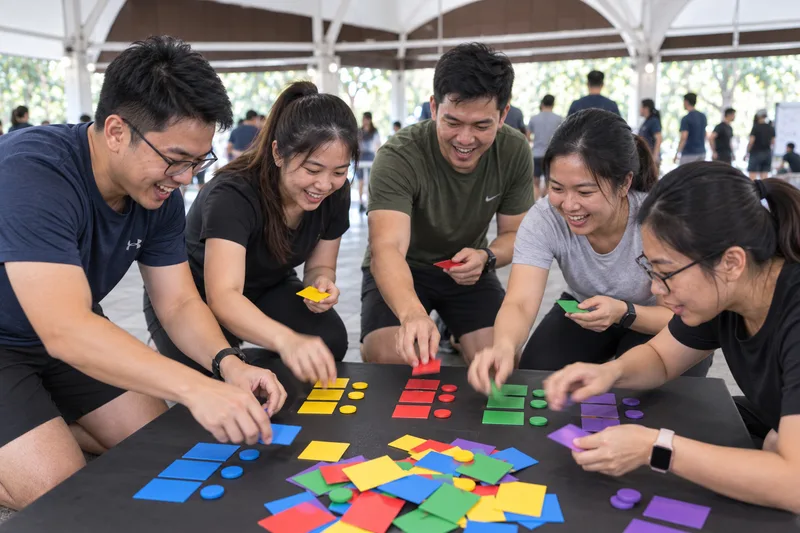
New-hire onboarding team building should help people learn names, understand team rhythm, and join the group without feeling tested on day one. A practical starting plan uses simple rules, clear facilitation, and a format that lets new joiners contribute before the event becomes competitive.
Start here
Choose the onboarding context. The result frames whether to use a gentle mixed-group plan, mission activity, or welcome-day flow.
Decision framework
Onboarding activities should reduce friction and help people join the team before asking for high energy.
The first job is to help people speak, learn names, and understand who they are working with.
New hires may not know team humour, fitness range, seniority, or communication norms yet.
Orientation, food, leadership messages, and the activity should feel like one coherent welcome.
Useful next steps
Use these pages when you are ready to compare formats, check details, review examples, or contact Cohesion.
Use these routes when the group is still choosing the activity shape.
Use these before the event reaches HR or managers.
Readiness check
Tick these before asking for a final recommendation.
Brief builder
Turn the new-hire context into a short event recommendation note.
Proof and context
Use these routes when you need a welcoming activity direction.
FAQ
Simple facilitated formats, mixed-group stations, and structured mission games can work when you protect first-time comfort and keep rules clear.
It can include light competition, but the first goal should be welcome, names, and team rhythm rather than pressure.
Send the expected group size, cohort type, existing-team involvement, timing, venue direction, and whether the goal is welcome, confidence, or collaboration.
Next step
Use the planner if you already know the rough date, group size, and event direction.
Open Event Planner